
If your vehicle starts pulling to one side while driving down Highway 65 or you notice uneven tire wear after commuting through Pine Bluff, it may be more than just normal tire aging. Many drivers hear recommendations for both wheel balancing and wheel alignment, yet these services are often confused despite addressing different problems.
Wheel alignment and wheel balancing are separate maintenance services that work together to improve tire performance, handling, and vehicle efficiency. In Pine Bluff, road conditions, daily commuting, and normal tire wear can gradually affect both alignment angles and wheel balance, making regular inspections an important part of vehicle care.
What Drivers in Pine Bluff Should Know
- Wheel alignment corrects the angles of your wheels so they point in the proper direction and make even contact with the road.
- Wheel balancing corrects uneven weight distribution within the tire and wheel assembly to reduce vibrations.
- Both services help extend tire life and improve vehicle handling, but they solve different problems.
- Uneven tire wear in Pine Bluff often develops faster when alignment issues go uncorrected.
- Regular inspections as part of auto maintenance Pine Bluff AR can help identify tire and suspension issues before they become costly repairs.
Why Tire Performance Matters in Jefferson County
Wheel alignment and wheel balancing are important because they directly affect how your tires contact the road. Vehicles driven throughout Jefferson County encounter a mix of city streets, highways, railroad crossings, and occasional potholes that can gradually affect suspension components and wheel positioning.
Drivers traveling between neighborhoods such as Watson Chapel, White Hall, and the downtown area may experience conditions that contribute to alignment changes over time. Even minor impacts from curbs or road hazards can alter alignment settings enough to affect tire wear and steering performance.
At Midtown Tire & Auto, we frequently see customers who assume balancing and alignment are the same service. In reality, understanding the difference can help vehicle owners make informed maintenance decisions and protect their investment in new tires.
Maintaining proper wheel alignment and balance is one of the most effective ways to improve tire longevity, driving comfort, and overall vehicle performance. These services support safe handling while helping drivers get the maximum value from their tires.
Wheel alignment adjusts wheel angles to manufacturer specifications, while wheel balancing corrects uneven weight distribution within the tire and wheel assembly. Both services reduce tire wear, improve handling, and support vehicle efficiency. Drivers throughout Pine Bluff benefit from regular inspections because road impacts and normal driving conditions can gradually affect both systems.
Tire and Handling Factors Local Drivers Should Understand
- Roads throughout Jefferson County can contribute to gradual alignment changes over time.
- New tires perform best when paired with proper alignment and balancing.
- Steering pull often indicates an alignment concern rather than a balancing issue.
- Vibrations felt through the steering wheel commonly indicate a balancing problem.
- Suspension wear can affect alignment accuracy and tire wear patterns.
- Regular tire services Pine Bluff AR can identify issues before they shorten tire life.
If you have noticed unusual tire wear, steering concerns, or vehicle vibration, a professional inspection can determine whether balancing, alignment, or both services are needed.
Local Data and Road Conditions
Wheel alignment and balancing concerns are common because vehicles are constantly exposed to road impacts, changing driving conditions, and normal suspension wear. While every vehicle experiences wear differently, local drivers frequently encounter conditions such as potholes, railroad crossings, and uneven pavement that can influence wheel positioning and tire performance.
According to guidance from major vehicle manufacturers and tire manufacturers, regular alignment and balancing inspections help maximize tire life and maintain safe handling characteristics. Preventive maintenance is especially valuable after installing new tires or replacing suspension components.
How Alignment and Balancing Affect Local Drivers
Wheel alignment and balancing affect vehicle control, comfort, and tire lifespan. When either service is neglected, drivers may experience increased operating costs through premature tire replacement and reduced fuel efficiency.
For example, a vehicle that is out of alignment may constantly drag slightly to one side. Even when the issue seems minor, the resulting tire wear can shorten tire life significantly. Likewise, an unbalanced tire can create vibrations that become more noticeable at highway speeds, making daily commutes less comfortable.
Expert Commentary
Wheel alignment and wheel balancing are frequently recommended together because both contribute to proper tire performance. However, one common misconception is that solving a vibration issue automatically requires an alignment.
In many cases, vibrations originate from an imbalance in the tire and wheel assembly, while steering pull and uneven tread wear are more closely associated with alignment problems. We recommend evaluating both systems during routine maintenance visits to ensure all tire-related concerns are addressed.
Warning Signs Your Vehicle May Need Service
Wheel alignment and balancing problems often reveal themselves through noticeable driving symptoms. Addressing these warning signs early can prevent additional tire wear and handling concerns.
Common signs include:
- Vehicle pulling left or right while driving
- Uneven tire tread wear
- Steering wheel that is not centered
- Vibrations at certain speeds
- Shaking felt through the steering wheel
- Increased tire noise
- Reduced handling stability
- Recent impact with a curb or pothole
Ignoring these symptoms can lead to accelerated tire wear and reduced driving comfort.
When to Call a Professional
Professional inspection is recommended whenever you notice steering changes, uneven tire wear, or persistent vibration. While drivers can visually inspect tire wear patterns, diagnosing the root cause often requires specialized equipment.
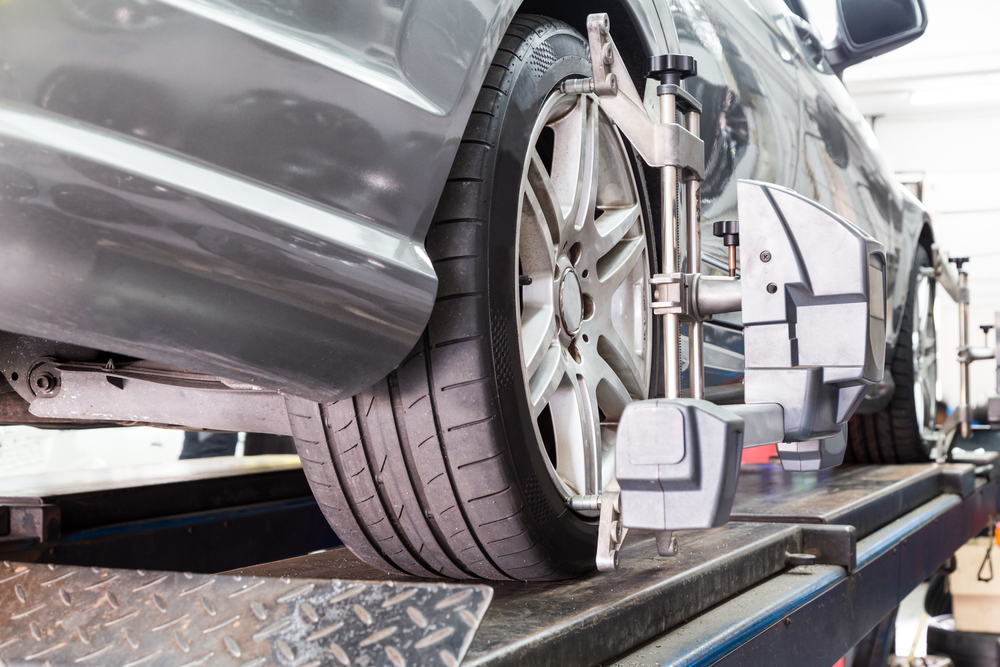
Alignment measurements and balancing procedures require precision tools that accurately identify wheel angles and weight distribution issues. Prompt evaluation helps prevent unnecessary tire replacement and supports safer vehicle operation.
Common Causes of Alignment and Balancing Problems
Wheel alignment and balancing issues typically develop from normal driving conditions, road impacts, and component wear. Several factors are particularly common among vehicles in this region.
Common causes include:
- Potholes and rough pavement
- Curb impacts during parking
- Suspension component wear
- Tire replacement without balancing
- Bent wheels from road hazards
- Normal tire wear over time
- Vehicle modifications affecting suspension geometry
Understanding these causes helps drivers recognize why routine inspections are beneficial.
Prevention Strategies for Longer Tire Life
Preventing alignment and balancing issues starts with consistent maintenance. Regular inspections can identify developing problems before they become severe enough to damage tires.
Helpful prevention steps include:
- Check tire pressure regularly
- Rotate tires according to manufacturer recommendations
- Schedule alignment checks periodically
- Balance tires when new tires are installed
- Inspect suspension components during maintenance visits
- Address steering or vibration concerns promptly
These practices support longer tire life and more predictable vehicle handling.
Expected Results After Service
Proper wheel alignment and balancing can significantly improve vehicle performance. Most drivers notice smoother driving, more responsive steering, and reduced tire wear shortly after service.
Benefits often include:
- Improved driving comfort
- Better steering response
- Reduced tire vibration
- More even tread wear
- Increased tire lifespan
- Enhanced fuel efficiency potential
Results vary depending on tire condition and the severity of existing issues.
Expert Insight
Routine tire maintenance is often less expensive than replacing tires prematurely. We frequently find that addressing minor alignment or balancing concerns early helps drivers avoid unnecessary tire wear and maintain more consistent vehicle performance throughout the year.
Common Mistakes Drivers Make
Many tire performance problems become worse because of simple maintenance mistakes.
- Mistake: Ignoring slight steering pull.
Consequence: Accelerated tire wear.
Better approach: Schedule an alignment inspection. - Mistake: Replacing tires without balancing.
Consequence: Increased vibration.
Better approach: Balance every new tire installation. - Mistake: Waiting for severe symptoms.
Consequence: Higher repair costs.
Better approach: Address concerns early.
A Common Local Scenario
A common local scenario involves a driver purchasing new tires after noticing uneven tread wear. After installation, the vehicle still pulls slightly to one side. Upon inspection, technicians discover that the tires were not the root cause. The vehicle also required alignment correction.
After both services are completed, tire wear becomes more consistent and handling improves. This illustrates why balancing and alignment should be evaluated together rather than viewed as interchangeable services.
Tire Services That Help Solve the Problem
Wheel alignment and wheel balancing are the primary services that address tire wear, vibration, and handling concerns. These services work best when combined with regular tire inspections and maintenance.
Related services may include:
- Tire installation
- Tire rotation
- Suspension inspections
- Tire pressure evaluations
- Wheel inspections
Together, these tire services Pine Bluff AR help support safer and more efficient vehicle operation.
Comparing Your Options
Professional alignment and balancing services provide a level of accuracy that cannot be achieved through visual inspection alone.
| Option | Benefits | Limitations |
|---|---|---|
| DIY Monitoring | Identifies obvious symptoms | Cannot measure alignment angles |
| Professional Balancing | Eliminates vibration issues | Does not correct alignment |
| Professional Alignment | Corrects wheel angles | Does not balance tires |
| Combined Service | Addresses both concerns | Requires professional equipment |
For most drivers, a comprehensive inspection provides the clearest picture of tire performance issues.
Service Areas
We proudly assist drivers throughout Pine Bluff and surrounding communities, including White Hall, Watson Chapel, Redfield, and other nearby areas within Jefferson County. Our familiarity with local driving conditions helps us identify tire and wheel issues commonly encountered throughout the region.
Cost of Ignoring This Issue
Ignoring wheel alignment or balancing concerns can lead to higher long-term vehicle expenses. Uneven tire wear often shortens tire life, while persistent vibration can contribute to additional wear on suspension and steering components.
Addressing issues early is typically more cost-effective than replacing tires prematurely or repairing related components later.
FAQ
What is the difference between wheel balancing and wheel alignment?
Wheel balancing corrects uneven weight distribution within the tire and wheel assembly. Wheel alignment adjusts wheel angles to manufacturer specifications so the tires make proper contact with the road.
How often should drivers schedule alignment checks?
Alignment checks are commonly recommended when installing new tires, after significant road impacts, or whenever steering and tire wear concerns develop. Routine inspections can also be beneficial during regular maintenance visits.
Can poor alignment damage tires?
Yes. Poor alignment can cause uneven tread wear that shortens tire lifespan and affects vehicle handling. The longer the issue remains uncorrected, the more severe the wear may become.
What causes steering wheel vibration?
Steering wheel vibration is often associated with tire balance issues, although wheel damage, tire defects, or suspension concerns may also contribute. Professional diagnosis helps identify the exact cause.
Why are tire services important in Pine Bluff AR?
Tire services Pine Bluff AR help drivers maintain safe handling, maximize tire life, and improve driving comfort. Local road conditions and everyday driving can gradually affect tire performance.
Should alignment be performed when replacing tires?
In many situations, yes. Verifying alignment during tire replacement helps ensure new tires wear evenly and deliver their expected lifespan.
Can balancing fix uneven tire wear?
Balancing alone does not typically correct uneven tire wear caused by alignment issues. A complete inspection is often necessary to determine which service is needed.
What are common signs of alignment problems?
Common signs include steering pull, uneven tread wear, an off-center steering wheel, and reduced handling stability.
Midtown Tire & Auto understands how tire performance issues affect local drivers and vehicle owners throughout the area. By understanding the differences between wheel balancing and wheel alignment, you can make better maintenance decisions and protect your investment in your vehicle.
Keep Your Tires Performing Their Best
Regular inspections and preventive maintenance help improve tire life, handling, and driving comfort. If you have questions about wheel alignment, wheel balancing, or general auto maintenance Pine Bluff AR, our team is ready to help you understand your options.